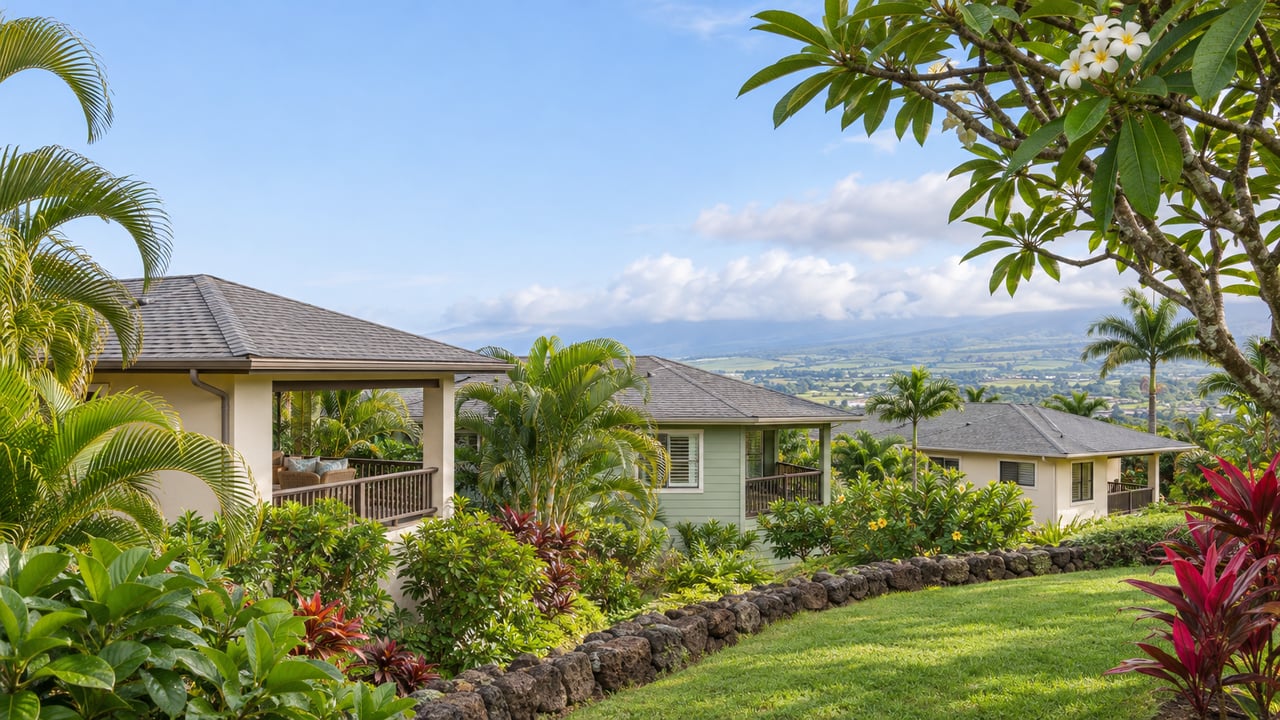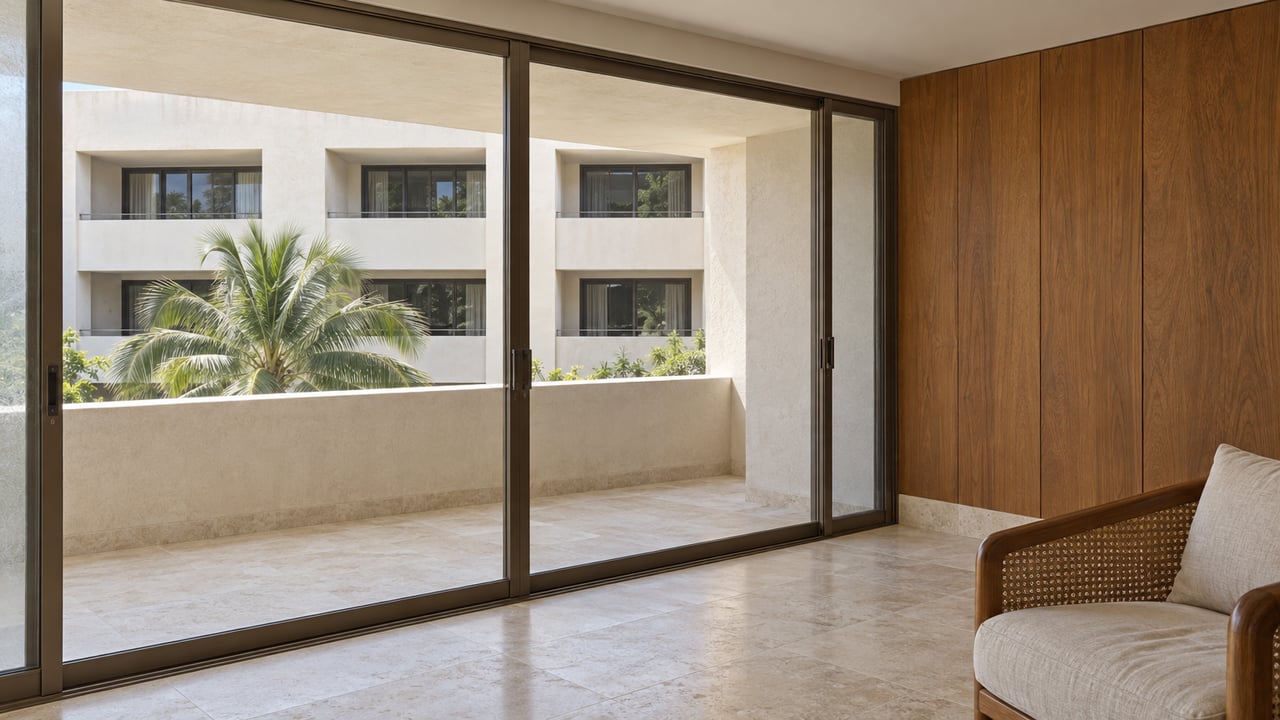
Under the association's posted construction schedule, Hokulani unit 102 at Honua Kai was set to go dark for rentals on January 12, 2026. Its air conditioning was to be off, its floors covered, and the unit empty until a scheduled handover on Sunday, February 8, the middle of West Maui's winter high season. Down the same wing, units 138 and 140 were scheduled to wait until August 31 for their turn, with handover set for September 27, a quieter stretch of the calendar.
The owners didn't choose those dates. They came from the roof.
Over the next year, buyers will ask sellers for trailing twelve-month rental statements at Honua Kai, and many of those statements will include a gap. The posted schedule shows different construction windows for different units.
A unit-by-unit schedule nobody could negotiate
The Honua Kai Condominium Association laid out the logic in its October 28, 2025 construction bulletin. The new rooftop condensers in the Hokulani and Konea towers are being replaced in order of where they sit on each roof, with cranes working their way around the towers. Each condenser feeds the fan coil units in several residences. Every unit on a shared condenser stays without air conditioning until all the fan coils on that condenser are replaced, the new condenser is installed, and the system is tested.
Because the sequence follows the equipment, the bulletin states plainly that the project team cannot change dates for individual circumstances. The vacancy rule is just as firm:
"UNITS MUST BE VACANT DURING THE CONSTRUCTION PERIOD IDENTIFIED IN THE CONSTRUCTION SCHEDULE FOR EACH SPECIFIC UNIT."
The bulletin adds that the air conditioning would be off around the clock in each unit under construction, that units could not be rented or occupied in any way, and that owners and property managers were responsible for planning their rental strategies around it.
The posted schedule shows how unevenly that played out on a single wing of Hokulani:
| Hokulani unit | Scheduled start | Scheduled handover | Season it fell in |
|---|---|---|---|
| 102 | January 12, 2026 | February 8, 2026 | Winter high season |
| 105 | February 2, 2026 | March 1, 2026 | Late winter |
| 112 | April 6, 2026 | May 3, 2026 | Spring shoulder |
| 138 and 140 | August 31, 2026 | September 27, 2026 | Late summer |
| 147 | October 12, 2026 | November 15, 2026 | Fall, five weeks |
| 144 and 145 | October 26, 2026 | November 22, 2026 | Runs into the week before Thanksgiving |
Some units have two separate phases of work: Hokulani 922 and 934, and Konea 601, 701, 1025 and 1029. Depending on the unit, those phases overlap or fall apart from each other, which can mean two gaps on one owner's 2026 calendar.
Why every owner lost weeks in the same year
The disruption landed in 2026 because of a federal refrigerant deadline, not because of any one owner's maintenance choice.
The towers' original system was a variable refrigerant flow setup installed in 2008 and 2009, built by a Samsung and Trane partnership that has since dissolved. Its warranties had expired and replacement parts were hard to find, according to the association's first project bulletin in May 2025. The old system ran on R-410A refrigerant, which the EPA is phasing down. The newer R-32 alternative would probably have required substantial changes to the buildings' refrigerant piping, including demolishing walls, and the bulletin estimated those distribution changes alone could exceed $10 million.
The cheaper option was to install new R-410A equipment before the window closed. Under the EPA's December 2024 rule for variable refrigerant flow systems, qualifying components had to be manufactured or imported before January 1, 2026, and installed before January 1, 2027. The EPA revised several refrigerant rules in a May 26, 2026 final rule, but its current sector table still lists January 1, 2027 as the installation date for this kind of system.
That deadline compressed the work for both towers into a single year. The bulletin put primary work at "almost the entire calendar year 2026," on weekdays from 8 a.m. to 5 p.m. The last handover on the posted schedule is December 20, 2026, less than two weeks before the federal cutoff.
What this does to a 2026 rental statement
A buyer comparing two listings may see one unit's income trail another's. The posted schedule shows different construction windows for different units.
Four weeks in late winter and four weeks in late summer fall in different parts of the resort calendar, even though both appear as one gap on the statement. Units with handovers on November 15 and 22 also lost part of the fall run-up to the holidays. On the date this post publishes, those handovers are still scheduled and not yet complete.
The effect reaches past the unit under construction. The bulletin says neighboring units would hear hammer-drill noise while new fan coil anchors went in, that crews would move equipment through shared hallways and elevators past occupied units, and that cranes would be set up around each tower for the length of the project. Guest reviews and nightly rates from 2026 may show some of that, even for units that were never vacant during a busy week.
More buyers are likely to be reading these statements soon. In September 2026, the Realtors Association of Maui recorded 11 Kaanapali condo sales, compared with 5 in September 2025. Through the first nine months of 2026, Kaanapali had 70 condo sales against 51 in the same period of 2025, while the year-to-date median fell to $1,027,500 from $1,152,500. Countywide, condos averaged 199 days on market in September 2026 and inventory stood at 12.1 months of supply, according to the RAM monthly report and Maui Now's coverage of it. When buyers have that much time and that much choice, a misread income figure can shape an offer.
The other side of the ledger
The project is replacing tower air conditioning equipment that had become hard to keep running. In a resort where nearly every unit depends on the same shared system, the work affects both towers.
The new equipment still uses R-410A. The EPA's frequently asked questions note that refrigerant and component availability may decline over time. The phasedown holds HFC production and consumption at 60% of baseline from 2024 through 2028, then steps down to 30% from 2029. For now, ACHR News reported in August 2026 that nearly 80% of surveyed HARDI distributors had R-410A inventories at or above target, and the same report anticipated price pressure as supply tightens.
Documents worth requesting before an offer
For a buyer or seller putting a Honua Kai unit's 2026 performance in context, these are the documents that tie the numbers back to the schedule:
- The unit's line in the association's construction schedule, including whether it is one of the two-phase units.
- Monthly rental statements for 2026 alongside 2025, so the blackout month can be compared with the same month a year earlier.
- Confirmation of the unit's actual handover date and any punch-list work recorded after it.
- The association's records showing how the project was paid for, whether through reserves, a special assessment or other financing, and how that affects the unit's dues going forward.
This is general information, not legal, tax or financial advice. Association obligations and rental rules vary by unit and by contract, so please confirm your own situation with the association, your attorney and your financial advisor.
A few straight answers
Does the contractor work through the holidays? The bulletin lists Castaway Construction's days off as including Veterans Day on November 11 and Thanksgiving on November 26 and 27, 2026, plus Christmas Day. It expects weekend work only if the schedule needs to catch up.
Who manages the project? Castaway Construction is the contractor and Native Technologies is the construction project manager, working with the association's board, its AC Replacement Committee and Honua Kai Management.
If you're looking at a Honua Kai condo, or getting ready to list one, and want its 2026 numbers read against its place in the construction schedule, Dee Garnes is happy to go through them line by line with you. Schedule a private consultation and we'll put each statement next to its handover date before you set a price or make an offer.